
Then. NOW. Next.
When the Pay Car Came to Commercial Street
An 1878 bookseller’s tip leads to the railroad payday that kept North Springfield’s merchants in business.
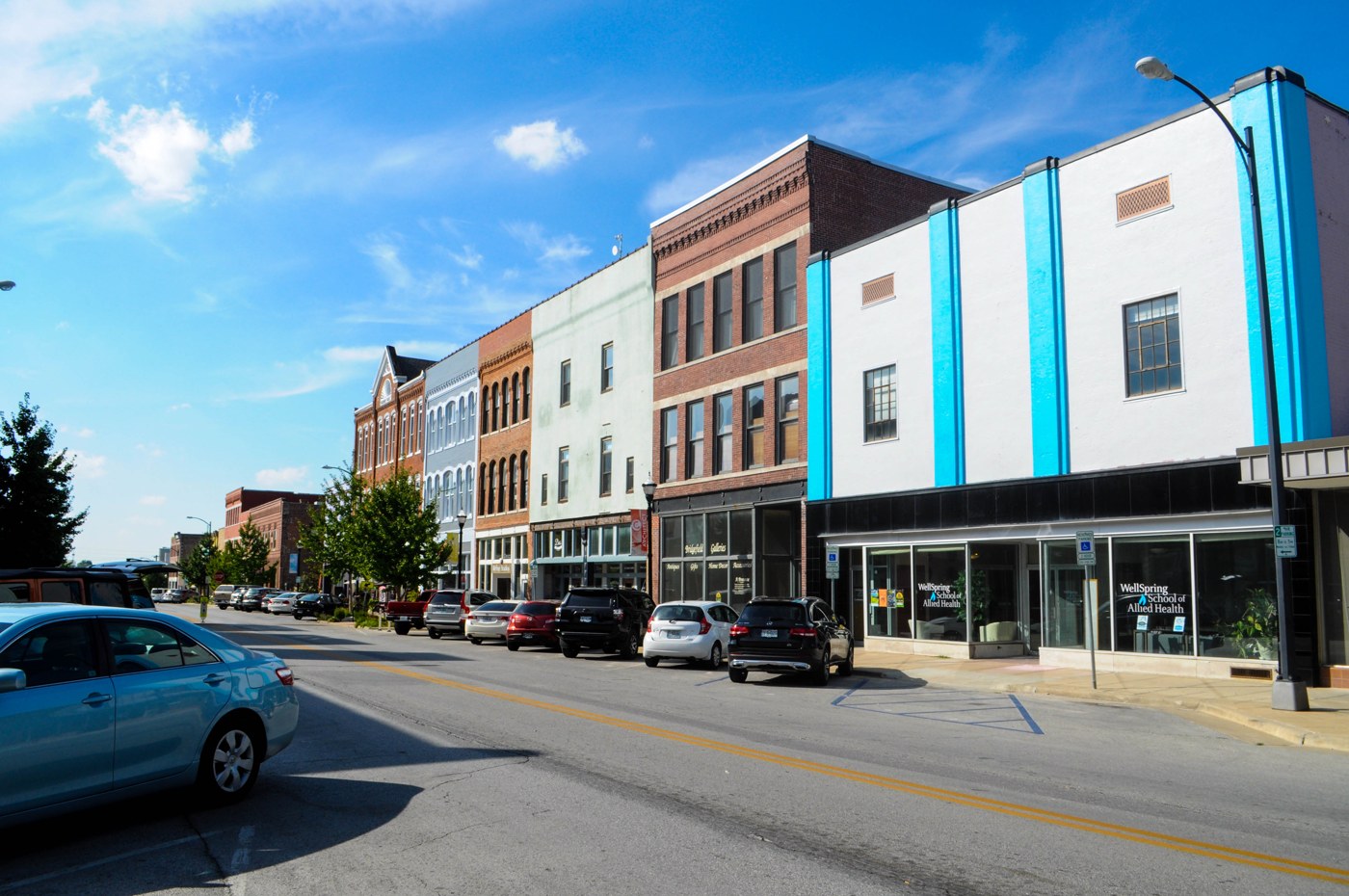
Before Springfield and North Springfield became one city, the railroad ran a downtown of its own. You can still find it at the corner of Commercial and Robberson.

If you sold books in North Springfield in 1878, it paid to know the railroad schedule. Once a month, a pay car arrived with the railroad workers’ wages. The local directory observed that a bookseller who hoped to collect ought to time his deliveries accordingly. It’s a small piece of business advice that doubles as a map of the town. Follow the money off the train and it leads you straight to Commercial Street. 1878 directory of Springfield and North Springfield
How Springfield got a second downtown
Springfield already had a public square when surveyors laid out a rail route roughly a mile and a half north of its business district. Landowners along the proposed line had something the merchants on the square couldn’t match cheaply. They offered a right-of-way, forty acres for railroad shops, and a half interest in the town they proposed to build beside the depot. Bringing the line closer to the square would have cost extra. The railroad wanted Springfield to cover the difference. The deal never came together. Commercial Street Historic District nomination
The Ozark Land Company laid out North Springfield in 1869. The Atlantic and Pacific trains arrived in 1870. North Springfield incorporated in 1871, with Commercial Street as its business district. For a time, a traveler could buy a ticket to the Springfield area, step off the train, find a hotel and do a day’s shopping, all before setting foot in Springfield proper. Historic district nomination · North Springfield town history
Sugar and coffee at Commercial and Robberson
To put a person on that map, start at Robberson Avenue. In the spring of 1870, H. H. Kaufholz opened a general store at the corner. He sold sugar and coffee there. Across the street stood a grain elevator. When it burned in October 1872, the heat set Kaufholz’s store alight from more than a hundred feet away. His insurance barely covered his debts. With help from friends in New York, he rebuilt on the same ground the next year. This time he built in brick. 1878 directory’s account of Kaufholz and the fire
A few entries farther along in the directory, another Commercial Street business appears under the name of James McKenna, a painter. Read past the heading and you discover who usually ran the place. While James went out on painting jobs, Mrs. McKenna kept the couple’s ice-cream and toy shop. The railroad might explain how the town got there. She helps explain why someone would take a child downtown on an ordinary afternoon. The McKenna entry in the 1878 directory
Springfield and North Springfield merged in 1887. Next time you’re on C-Street, walk as far as Robberson and open one of the district’s old fire-insurance maps on your phone. Find the tracks first. Then find the storefronts. For a moment, put Springfield’s public square out of your mind. If you were standing here with railroad pay in your pocket and coffee to buy, you were already downtown. Commercial Street history and map archive · History of the merger